Top 10 Lunar Cycle Tarot Rituals, Art Therapy Practices for New Moon to Full Moon Healing
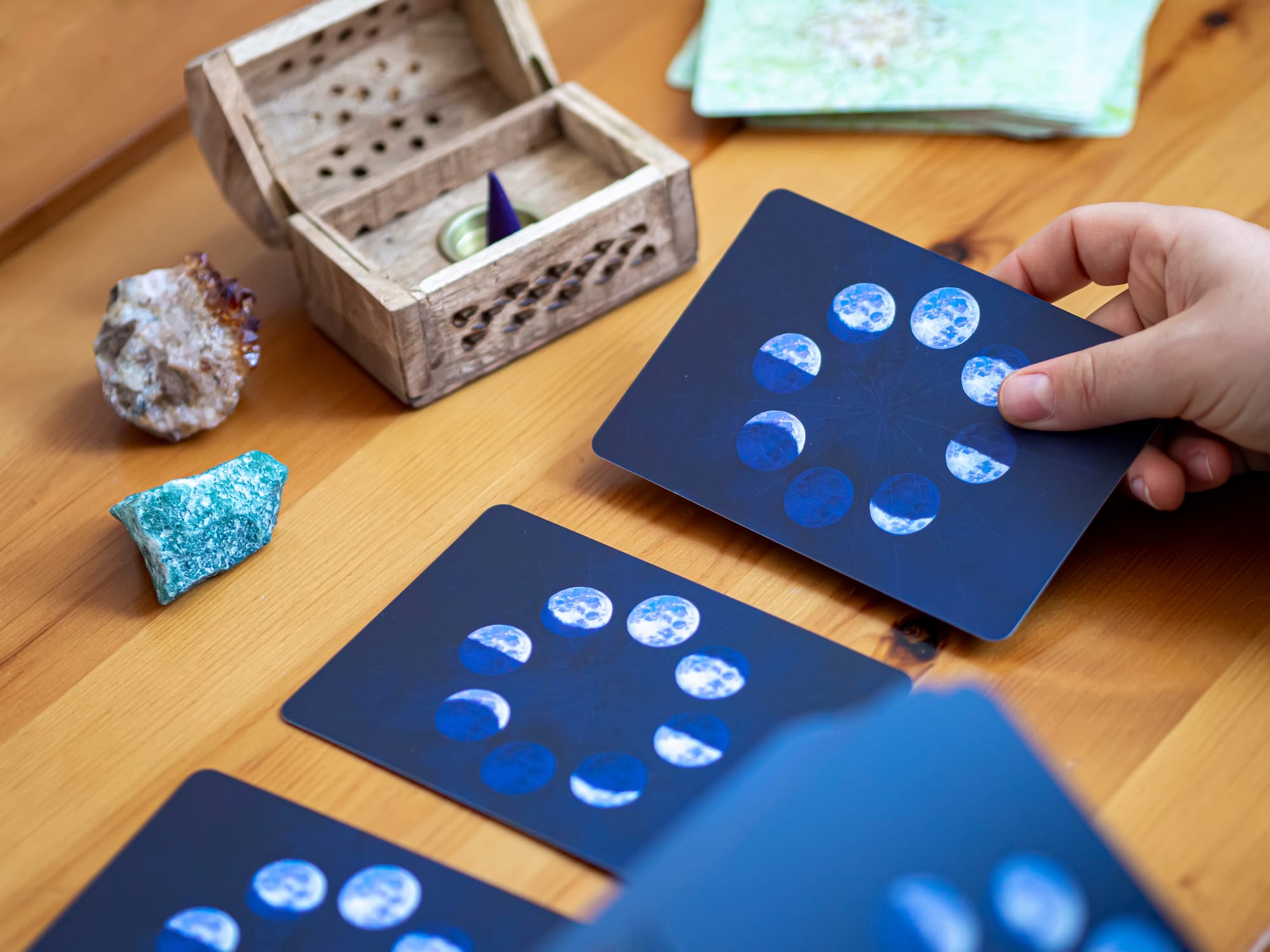
Kassi Gregory - Heart of Tigiris at www.tigirisillustrations.com is a Tarot focused space for intuitive practice, symbolism, and creative healing. If you love working with moon phases, Tarot can give your feelings a clear language, and art therapy style practices can give those feelings a safe place to move, soften, and transform.
This article shares Top 10 lunar cycle Tarot rituals designed as a step by step path from New Moon to Full Moon healing, then back through waning integration. Each ritual includes a Tarot anchor, a simple art process, and a closing action so the insight becomes embodied.
How to use this list: Choose one ritual per moon phase, or complete all ten across a single lunar month. Keep your supplies simple, paper, pencil, a few markers or watercolors, glue, and a small container for scraps. If big feelings arise, slow down, ground with breath, and reach out to a qualified mental health professional for support. These prompts are supportive and reflective, not a substitute for therapy.
Suggested core tools: a Tarot deck you trust, a journal, one candle, a bowl of water, a small dish for salt, and a timer. Optional extras include dried flowers, thread, magazines for collage, and a playlist that matches the mood of each phase.
- 1) New Moon, The Seed Intention Ritual (Tarot: The Fool or Ace of Wands) Begin in a quiet space with low light. Shuffle while asking, “What new experience wants to be lived through me this cycle?” Pull one card for the seed, and one card for what might try to distract you. On paper, draw a simple seed shape or small oval. Inside it, write three words that describe the feeling you want more than the outcome, for example “steady, seen, playful.” Around the seed, sketch a protective boundary, like a shell, circle, or roots. This is an art therapy style container that signals safety to your nervous system. Close by placing the card and drawing under a small stone or book overnight. In the morning, take one practical step that matches your three words, even if it is tiny. Consistency is the spell.
- 2) Waxing Crescent, The Symbol Hunt Sketch Walk (Tarot: The Magician) The waxing crescent is about gathering resources. Pull one card asking, “What tool is available to me now?” Then take a 10 to 20 minute walk, indoors or outdoors, and look for shapes or symbols that echo your card. If you pull The Magician, you might notice hands, tables, tools, wires, notebooks, or bright signage. Back home, do three quick sketches, each no longer than 3 minutes, of the most meaningful symbols you saw. Do not aim for realism. Aim for recognition and feeling. Under each sketch, write one sentence: “This symbol reminds me I can…” Then create a simple activation: choose one sketch and highlight it with color. Close by placing the card next to the highlighted sketch and speaking one clear request, “Show me the next small opportunity to use this tool.”
- 3) First Quarter, The Choice and Courage Collage (Tarot: Strength or Two of Swords) First quarter energy can feel like friction. It often reveals the first real obstacle, or the first moment you must choose yourself. Pull two cards: one for “What I am building,” and one for “What pushes back.” Then make a fast collage: tear magazine pages or colored paper into two piles. One pile represents support, textures, colors, words that feel like yes. The other represents resistance, heavy colors, sharp patterns, words that feel like no. Glue them on opposite sides of a page, leaving a clear line down the center. Now bridge the center line with three small torn pieces that blend both sides. This art therapy technique helps the mind tolerate complexity instead of forcing a false either or. Close by writing a single boundary statement you can practice for the next 7 days, such as “I will respond, not react.” Place it somewhere visible.
- 4) Waxing Gibbous, The Refinement Mandala (Tarot: Temperance) Waxing gibbous is refinement, editing, and devotion. Pull one card asking, “What needs adjustment so my intention can thrive?” Set a timer for 12 minutes. Draw a circle and create a simple mandala from repeated shapes, dots, leaves, waves, or tiny moons. As you repeat the pattern, focus on the felt sense of gentle improvement, not perfection. If your mind criticizes, treat that thought like a passing cloud and return to the pattern. When the timer ends, choose one area of the mandala to color more boldly. This becomes your symbol of focused effort. Close by naming one habit to refine before the Full Moon, and keep it modest, for example, “10 minutes of tidying,” “one glass of water before coffee,” or “no phone for the first 15 minutes after waking.”
- 5) Full Moon, The Illumination and Release Watercolor (Tarot: The Moon, The Sun, or Judgment) The Full Moon brings clarity and emotional brightness. Start with a short grounding: one hand on your chest, one on your belly, inhale for 4, exhale for 6, repeat five times. Pull three cards: “What is illuminated,” “What is ready to be released,” and “What replaces it when I let go.” On watercolor paper or any thick paper, paint a large circle like a moon. While the paint is wet, drop in a second color and let it bloom. In art therapy, this wet on wet process mirrors emotional movement and teaches permission. As the circle dries, write one sentence around the edge that begins with “I am willing to release…” Keep it specific and compassionate. Close by safely burning a small scrap of paper with the release sentence, or tear it and place it in water with salt, then pour it down the drain while imagining the feeling loosening.
- 6) Waning Gibbous, The Gratitude and Integration Map (Tarot: Six of Cups or The Star) After the peak, the waning gibbous phase is for harvesting meaning. Pull one card asking, “What lesson is ready to be received without struggle?” Then draw a simple map with three regions: “What worked,” “What surprised me,” and “What I will carry forward.” Add small icons in each region, a star for support, a spiral for growth, a wave for emotion, a key for insight. Next, choose one color and gently shade the region that feels most nourishing. This practice trains the brain to encode positive learning, not just painful memory. Close by writing a thank you note, short and real, to yourself, your body, or a supportive person. You do not have to send it. The act of writing is the medicine.
- 7) Last Quarter, The Boundary Sigil and Truth Telling Spread (Tarot: Justice or Queen of Swords) The last quarter asks for discernment and cleanup. Pull four cards: “What is draining me,” “What is mine to fix,” “What is not mine,” and “What boundary restores balance.” Now create a boundary sigil. Write your boundary in a short phrase, like “My time is sacred.” Remove repeating letters and stylize the remaining shapes into a symbol. Draw it large on a page. Add sharp, clean lines, or protective shapes like squares or triangles. Color it in one strong tone that feels firm. In art therapy, symbol creation helps the psyche accept new rules. Close by practicing a single sentence out loud that you can use in real life, such as “I can do that next week,” or “No, that does not work for me.” Speak it three times calmly.
- 8) Waning Crescent, The Dream Incubation Storyboard (Tarot: The High Priestess) Waning crescent energy is quiet, intuitive, and restorative. Pull one card at dusk asking, “What does my inner self want me to understand while I rest?” Before bed, create a simple three panel storyboard, like a comic strip. Panel one: “Where I am now.” Panel two: “What my soul is asking.” Panel three: “How I want to feel when I wake.” Use stick figures if needed. Add one symbol from your Tarot card into each panel, a pomegranate, a veil, a crescent, a book, whatever appears. Place the card under your pillow or near your bed. When you wake, write down any dream fragments, even a single color counts. Close by choosing one micro action that honors the dream mood, such as making tea, stretching, or lighting a candle for two minutes in silence.
- 9) Dark Moon, The Compassionate Void Ritual (Tarot: Death or Four of Swords) The dark moon is the liminal pause before the new cycle. It is not about forcing insights. It is about making space. Pull one card asking, “What can be allowed to end gently?” Then do a simple art therapy practice: take a page and cover it with charcoal, pencil shading, or dark paint. Let it be messy. Once the page is dark, use an eraser, a white pen, or your finger to create a small opening of light in the center. This teaches that emptiness can still hold a path. Write a single word inside the light opening, like “rest,” “forgive,” “enough,” or “quiet.” Close by doing less on purpose for one evening. Choose one restorative boundary, such as an early bedtime, a screen free hour, or a warm bath. The ritual is the permission slip.
- 10) Full Cycle, The Moon Wheel Tarot Gallery (Tarot: The World) This final ritual can be done at the end of the lunar month, or any time you want to consolidate healing. Gather the pages you made across the phases, or create them now as quick thumbnails. Pull one card asking, “What did I actually complete?” Lay your art in a circle like a moon wheel, starting with New Moon and moving clockwise to Full Moon, then waning phases. Stand over the wheel and notice where your eyes land first. That is often the phase where your psyche found the most charge. Choose three pieces and write a short gallery label for each: “What I learned,” “What I released,” and “What I am becoming.” If you want to go deeper, pull one clarifying card for each label. Close by choosing one symbol from the entire month to redraw on a clean page as your talisman for the next cycle. Place it on your altar, desk, or mirror.
Extra guidance for consistent results: Keep your rituals short enough to repeat. Ten minutes done regularly is more powerful than an hour done once. If you miss a phase, do not abandon the cycle. Start where you are, and let the moon teach you flexibility.
How to choose Tarot cards for each phase: You can pull at random, select a card that matches the phase, or use a small moon phase spread. A simple spread is “phase lesson,” “support,” and “next action.” Record your pulls so you can see repeating archetypes over months. Repeating cards are often the main storyline your healing wants to resolve.
Art therapy note: The goal is not pretty art. The goal is honest expression, nervous system regulation, and meaning making. If you feel stuck, change the material. Swap pencil for paint, paint for collage, collage for simple shapes. Movement restores flow.
Closing affirmation: May your New Moon intentions be clear, your Full Moon feelings be honored, and your waning phases be gentle enough to integrate the truth. Let your Tarot practice be a lantern, and your art be the path under your feet.