Top 10 Ways to Use a Tarot Journal for Faster Learning and Deeper Self Reflection
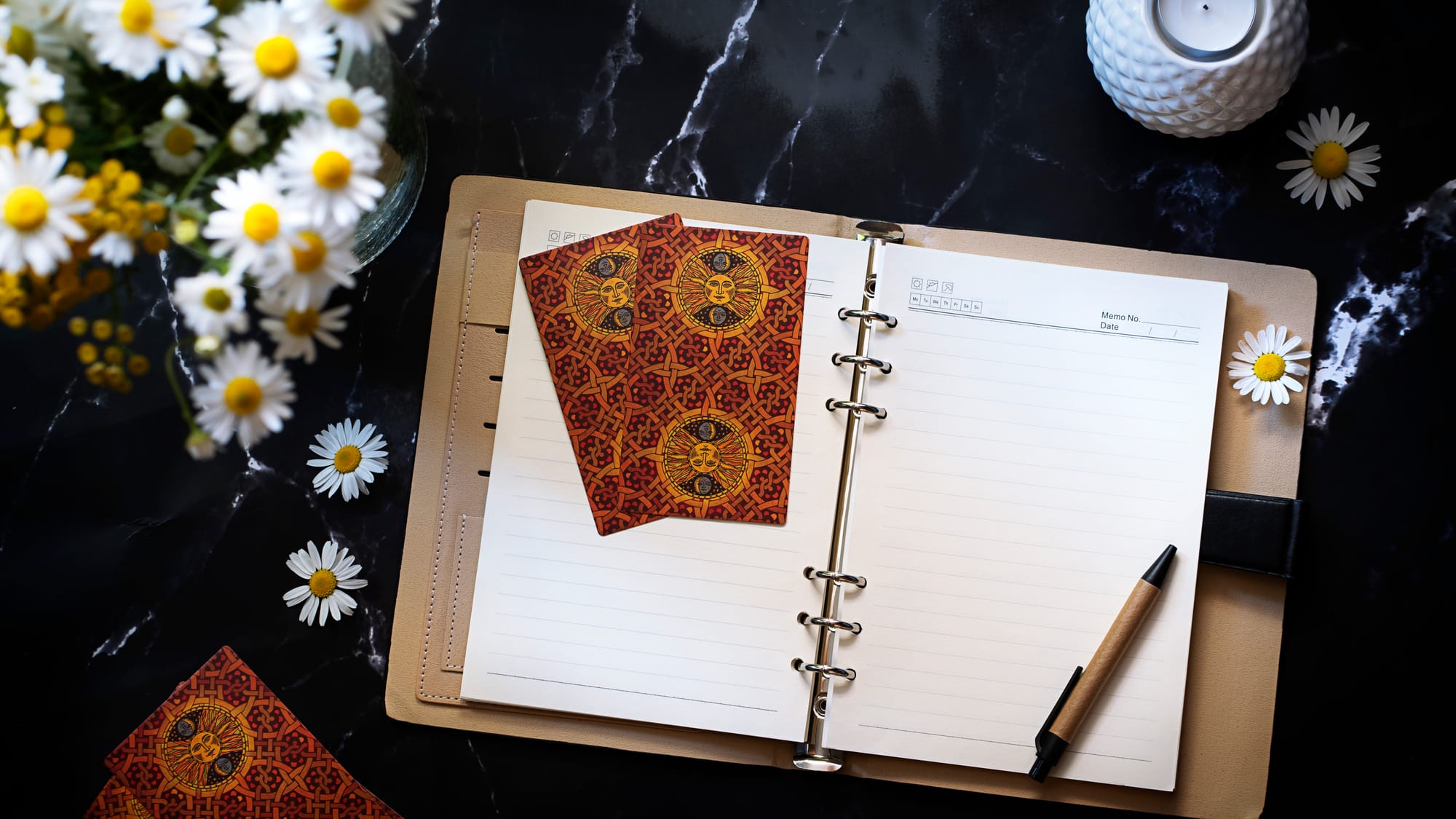
Top 10 Ways to Use a Tarot Journal for Faster Learning and Deeper Self Reflection
A tarot journal is one of the simplest tools you can add to your practice, and it is also one of the most powerful. If you feel like you are constantly looking up meanings, forgetting what you learned last week, or struggling to trust your intuition, a journal turns scattered insights into a personal, searchable system. Over time, it becomes your private textbook, your mirror, and your record of growth.
This matters because tarot is both a language and a relationship. You are learning symbols, patterns, card “grammar,” spread structures, and also learning how you personally receive information. A journal captures both. It shows you what each card means in real life, not only in a guidebook. It also helps you reflect with honesty, which is where real self knowledge starts.
If you read for yourself, you gain clarity. If you read for others, you gain accuracy and consistency. If you are an artist, writer, or intuitive creator, you gain a well of imagery and themes you can return to again and again. If you follow the work and aesthetic of Kassi Gregory, Heart of Tigiris at www.tigirisillustrations.com, journaling is also a beautiful way to connect your tarot practice to art, symbolism, and personal myth.
Below are ten practical, repeatable ways to use a tarot journal so you learn faster and reflect deeper. Each tip includes what to write, why it works, and optional prompts you can copy directly into your notebook.
1. Build a “Daily Card” practice that actually teaches you something
Pulling a daily card is common, but many people stop at a quick keyword and move on. Your tarot journal turns the daily pull into a structured lesson. The key is to write just enough to create a memory, and to revisit it later for feedback. This repeated loop of draw, interpret, live, review is how you learn quickly without cramming.
Try this structure for each daily card entry. It is short, but it covers the essentials and forces your brain to connect the card to lived experience.
- Card and deck: What you pulled, and which deck you used.
- First impression: One sentence. What did your body feel when you saw it.
- Three keywords: Choose your own, not the guidebook’s, unless you truly agree.
- Prediction or focus: What might this card describe today, or what would it advise.
- Evening reflection: What actually happened. Where did the card show up.
If you do nothing else, do the evening reflection. That is where learning accelerates. You start noticing how a card behaves in real life. For example, the Eight of Pentacles might show up as patient repetition, a small repair, skill building, or even the satisfaction of finishing a boring task. Your own notes teach you the card’s range.
Optional prompts to deepen self reflection:
- What part of me is this card highlighting today.
- What choice would align with this card’s healthiest expression.
- What would this card look like if I ignored it completely.
Time saving tip: if daily journaling feels heavy, do a “two minute entry” in the morning and a “two minute check in” at night. Consistency beats volume.
2. Create your personal keyword bank, and update it weekly
Most tarot learners gather meanings from many sources, then feel overwhelmed. A tarot journal can hold a keyword bank that is uniquely yours, built from your own readings and life events. This is faster than memorizing long paragraphs, because your brain remembers language you wrote yourself.
Set aside a few pages for each suit, plus a section for Major Arcana and court cards. Each time a card appears and you learn something new, add one line. Over time you will have a living glossary that reflects your experience, not only theory.
Suggested format for each card:
- Core theme: one phrase that feels true in most contexts.
- Looks like: 2 to 5 concrete examples from real situations.
- Shadow expression: how the theme distorts under stress.
- Supportive question: a question you can ask when the card appears.
Example idea, not a rule: for The High Priestess, your “looks like” list might include keeping a boundary, noticing a pattern, not oversharing, waiting for more information, sensing what is unsaid. Your supportive question could be, “What do I already know, even if I do not want to admit it.”
To keep the bank useful, review it weekly. Choose one card you saw that week and refine its entry. Add a new example. Cross out a keyword that no longer fits. This small maintenance prevents your notes from becoming a graveyard of copied meanings, and it keeps your learning crisp.
Fast learning benefit: you begin to recognize cards in the wild. The next time The High Priestess appears, your mind pulls your own examples instantly. That is what fluent tarot feels like.
3. Keep a spread library, and record what each position truly does
Many learners jump between spreads found online, then get confused when a spread does not “work.” A tarot journal helps you develop spread literacy. You learn which spread structures give you clear answers, which positions are redundant, and which layouts match your style.
Create a spread library section where each spread gets one page. Include:
- Spread name and purpose: What question type it fits, such as decision, healing, relationship dynamics, creative blocks.
- Positions: Write the positions in your own words, not copied.
- What to avoid: For example, “too many positions about the past,” or “position 5 overlaps with position 2.”
- When it shines: The mood, timing, or situation where it gives clean clarity.
- Adjustments: Your edits, such as reducing 10 cards to 5, or adding a clarifier rule.
After you use a spread, add a short post reading review. Rate it for clarity and emotional impact. Did it answer the question, or did it create noise. Did a certain position consistently confuse you. You can then rewrite that position into something actionable.
A powerful method is to journal “position behavior.” For instance, if you use a three card spread for mind, body, spirit, notice which cards repeatedly land in body. Do you keep pulling Swords in body, suggesting tension, sleep issues, or nervous system stress. That pattern teaches you about yourself and also about how your deck communicates.
Deep reflection prompt: “What position in my life am I avoiding that mirrors the spread position I dislike.” Sometimes the position that frustrates you is the one that tells the truth you do not want to face.
4. Write the question before you pull, then rewrite it after you interpret
A tarot journal can train one of the most overlooked tarot skills: asking good questions. The question shapes the whole reading. Vague questions lead to vague interpretations. Loaded questions lead to anxious interpretations. Clear questions lead to clear learning.
In your journal, always write the exact question you asked, word for word, before you shuffle. Then, after you interpret the cards, rewrite the question in a better form. This creates a feedback loop that improves your readings rapidly.
Use these journaling steps:
- Original question: What you asked in the moment.
- Hidden need: What you were really trying to know, such as reassurance, permission, a plan.
- Better question: A revised version that invites guidance and responsibility.
- Action question: One question that produces a next step.
Example: “Will my relationship work out” often hides “How can I feel safe.” A better question could be “What dynamic is strongest between us right now, and what can I do to support healthy communication.” An action question could be “What conversation do I need to have this week.”
Why this leads to faster learning: the cards become more consistent when your questions are consistent. You can compare similar questions across weeks and see what changes. That is real data. Your journal becomes a laboratory.
Deep reflection prompt: “If I already knew the answer, what would I do.” Write the honest answer before you pull cards. Then see how tarot confirms, challenges, or refines it. This trains discernment and reduces dependency on the deck.
5. Track emotional tone, body sensations, and nervous system cues during readings
Tarot is not only cognitive. Your body reacts to symbols faster than your mind explains them. Recording emotional tone and physical sensations in your tarot journal builds intuitive fluency. It also helps you tell the difference between intuition, anxiety, wishful thinking, and projection.
Add a small “somatic line” to each reading entry. You can keep it simple:
- Before the pull: calm, rushed, sad, excited, numb.
- While interpreting: tight chest, warm hands, heavy stomach, relaxed shoulders.
- After the reading: clearer, more confused, grounded, activated.
Then note what card or moment triggered a sensation. Over time, patterns emerge. You may discover that when The Tower appears you feel heat and urgency, but when it appears for a friend you feel calm, which might mean your personal history is involved. Or you may notice that The Moon makes you sleepy, which could be a cue that your intuition is speaking in images rather than logic.
This practice is also protective. If you see that you always feel panicky before certain questions, you can pause and regulate before reading. Your journal can include a short “reset routine,” like breathing for two minutes, drinking water, or asking a grounding question.
Deep reflection prompt list you can reuse:
- What feeling am I trying not to feel, and where does it show in the cards.
- What interpretation would I give if I felt completely safe.
- What boundary do I need before I keep reading on this topic.
Learning benefit: you stop treating tarot as only meanings on paper. You begin learning how you personally receive truth, which is the foundation of accurate self reflection.
6. Sketch symbols, colors, and compositions, even if you are not an “artist”
You do not need to be a trained artist to use drawing in your tarot journal. A quick sketch is a way to slow down and truly see the card. Tarot decks are visual systems. The more you engage visually, the faster you learn. This is especially effective if you love illustration, symbolism, and the kind of mythic visual storytelling associated with Heart of Tigiris.
Choose one card a week for a “symbol study” page. You can do a five minute sketch, a shape map, or a list of visual elements. Focus on what stands out to you in your deck, because different decks emphasize different details.
On your symbol study page, include:
- Three symbols that pull your attention: objects, animals, plants, background features.
- Color notes: dominant colors and what they suggest emotionally.
- Body language: posture, gaze direction, hand placement.
- Environment: indoor, outdoor, weather, time of day.
- One story: write a short narrative of what happened before and after the scene.
This method is powerful because it bypasses memorization. You are building direct association between image and meaning. When you later pull the card, your mind recalls the story you wrote, not a detached definition.
Deep reflection prompt: “Which symbol in this card represents me right now.” Sometimes you are the figure. Sometimes you are the mountain, the river, the animal, or the doorway. Journaling this builds self awareness quickly.
Optional: create a “visual index.” Assign a page number to each symbol study so you can flip through them like a personal art book of meanings.
7. Compare upright and reversed meanings using real examples, not fear
Reversals can speed up learning, but only if you approach them with nuance instead of dread. A tarot journal is the perfect place to develop a balanced reversal vocabulary based on your own readings. You are not trying to make reversed cards “bad.” You are exploring how the energy shifts, internalizes, delays, or becomes distorted.
If you read reversals, keep a two column log for any card that appears reversed. If you do not read reversals, you can still do this exercise by writing “supported expression” and “stressed expression.” The goal is the same: learn the range of the card.
Two column journal structure:
- Upright in my life: what it looked like when it was working well.
- Reversed or stressed in my life: what it looked like when it was blocked or unhealthy.
Example: The Empress upright might be nourishment, creativity, receiving, sensual connection with the body. Reversed might be over giving, neglecting your own needs, creative dryness from burnout, or using comfort to avoid feelings. These are not punishments. They are information.
Then add a third line: Return path. What helps the reversed card move toward its healthiest expression. This is where self reflection becomes self support.
Deep reflection prompts:
- How does this card show up when I am trying to control an outcome.
- What would it look like to practice the upright energy in a small way today.
- What am I afraid will happen if I embody the healthiest version of this card.
Learning benefit: you gain confidence with “difficult” cards. Your journal shows you that each card has a spectrum. That makes your readings more compassionate and more accurate.
8. Use tarot journaling for shadow work and pattern interruption
Deeper self reflection often means facing repeating patterns. Tarot journaling can support shadow work in a grounded way, especially when you avoid sensationalism and focus on honest questions. The goal is not to label yourself as broken. The goal is to understand what part of you is trying to protect you, and what it costs.
Choose a repeating life theme, such as people pleasing, procrastination, choosing unavailable partners, self criticism, money avoidance, creative fear, or conflict avoidance. Then do a simple spread and journal it thoroughly. A strong shadow work spread is five cards:
- What I am doing on the surface
- What I am trying to avoid feeling
- What this pattern protects me from
- What it costs me
- A kinder, braver next step
In your journal, interpret each card in two layers. First, the practical layer, what is happening in real life. Second, the inner layer, what belief, fear, or memory might be driving it. Then write a small action you can take within 24 hours. Shadow work is not only insight. It is integration.
Important journaling guideline: keep your tone compassionate and factual. Avoid writing as if you are scolding yourself. Write as if you are listening to a friend. This makes the process sustainable and safer.
Deep reflection prompts to include under the spread:
- What do I gain by keeping this pattern.
- What is the youngest part of me that would feel threatened by change.
- What boundary, habit, or conversation would interrupt this loop.
Learning benefit: you start seeing how tarot maps psychology. Cards stop being abstract. They become mirrors, and your journal becomes a record of growth, not just readings.
9. Track timing, manifestation, and “how it happened” details
Many tarot learners want to improve accuracy, especially around timing and outcomes. A tarot journal can help, but only if you track results in a disciplined way. This does not mean predicting lottery numbers. It means observing how certain cards correlate with pace, milestones, delays, and decision points in your life.
Create a “timing and outcome” template for any reading that involves a future event or goal. For example, job searches, creative launches, travel, relationship talks, or financial goals.
Journal template:
- Question and date
- Cards pulled and your prediction
- Time window you are checking (one week, one month, three months)
- What actions you took
- What happened
- Which card described the outcome best
- What you would interpret differently now
The final two bullets are gold. Many people skip them, then wonder why they do not improve. When you note which card best matched reality, you refine your meanings. When you note what you would interpret differently, you train humility and precision.
Also track “how it happened.” Tarot often describes the path, not only the destination. For instance, you might predict an opportunity because you pulled the Ace of Pentacles. Your journal might show that the opportunity came through a friend, which was hinted by the Three of Cups, not through cold applications. Next time you see that combination, you will recognize the route faster.
Deep reflection prompt: “Where did I have influence, and where did I not.” This reduces fatalism. It reminds you that tarot guidance works best when paired with real world action.
10. Maintain a reading log, then do monthly reviews like a personal apprenticeship
If you want faster learning, nothing beats review. Your tarot journal can become an apprenticeship record. You do readings, you document them, then you revisit them with a calmer mind. This is where you see your progress and correct your blind spots.
Keep a reading log for any significant spread, whether for yourself or others. Include the basics: date, deck, question, spread, cards, your interpretation, and outcome if known. But add two more elements that most people forget: confidence level and evidence.
- Confidence level: rate from 1 to 10 how grounded your interpretation felt.
- Evidence: what in the card imagery or position made you say that.
Writing evidence trains you to justify your interpretation with something concrete. That does not kill intuition, it strengthens it. You learn what signals you are using, and you become more consistent.
Then do a monthly review. Set aside 30 to 60 minutes once a month and answer these questions in your journal:
- What cards showed up the most, and what were the main life themes.
- What card did I misunderstand at first, and what did I learn later.
- Which spreads gave the clearest guidance.
- Where did I rely on the guidebook instead of my own perception.
- What is one card I want to study next month, and why.
Add a final section called My next experiment. Choose one skill to focus on, such as reading court cards, improving questions, practicing reversals, or reading without keywords. Your journal then becomes a training plan, not just a diary.
Deep reflection prompt: “How has my relationship with myself changed through tarot.” This keeps the practice aligned with self reflection, not just performance.
Putting it all together, a simple weekly tarot journal routine
If you want a practical way to start without getting overwhelmed, here is a gentle structure that uses the ten methods above in a sustainable rhythm:
- Daily: one card in the morning, two minute note. Evening reflection, two minute check in.
- Weekly: one symbol study page and one keyword bank update.
- Weekly: one spread you repeat each week, then record how the positions behave.
- As needed: shadow work spread when a pattern repeats.
- Monthly: reading log review, choose one learning focus for the next month.
The point is not to do everything perfectly. The point is to create a feedback loop. Tarot becomes easier when your journal holds your insights for you, so your mind is free to notice patterns instead of trying to remember every meaning.
Common mistakes to avoid when keeping a tarot journal
A few habits can make journaling feel heavy or unhelpful. Avoid these, and your practice will stay supportive:
- Copying pages of meanings without context: your brain learns through use, not transcription. If you copy, add your own example.
- Writing only when you feel inspired: consistency builds skill. Keep entries small on low energy days.
- Using the journal to panic: if you feel spiraled, switch to grounding prompts, or postpone the reading.
- Never reviewing old entries: review is where your learning multiplies.
- Trying to be “right” instead of curious: curiosity produces better interpretations and kinder self reflection.
Closing reflection
A tarot journal is more than a notebook. It is a relationship you build with your own mind, your intuition, and the symbolic language of the cards. It helps you learn faster because it turns each reading into a lesson with feedback. It helps you reflect deeper because it captures emotions, patterns, and choices over time.
Start simple. Pick one of the ten methods above and use it for seven days. Then add a second method. In a month, you will not only know more meanings. You will know yourself better, which is the real heart of tarot practice.
If your tarot path is intertwined with art and symbolism, let your journal be beautiful in a way that supports you. Add sketches, color notes, myths, poems, and personal symbols. Make it yours. Over time, your tarot journal becomes a map, a mirror, and a record of becoming.