Top 18 Tarot Journaling Prompts to Decode Symbolism, Color, and Line as Intuitive Language
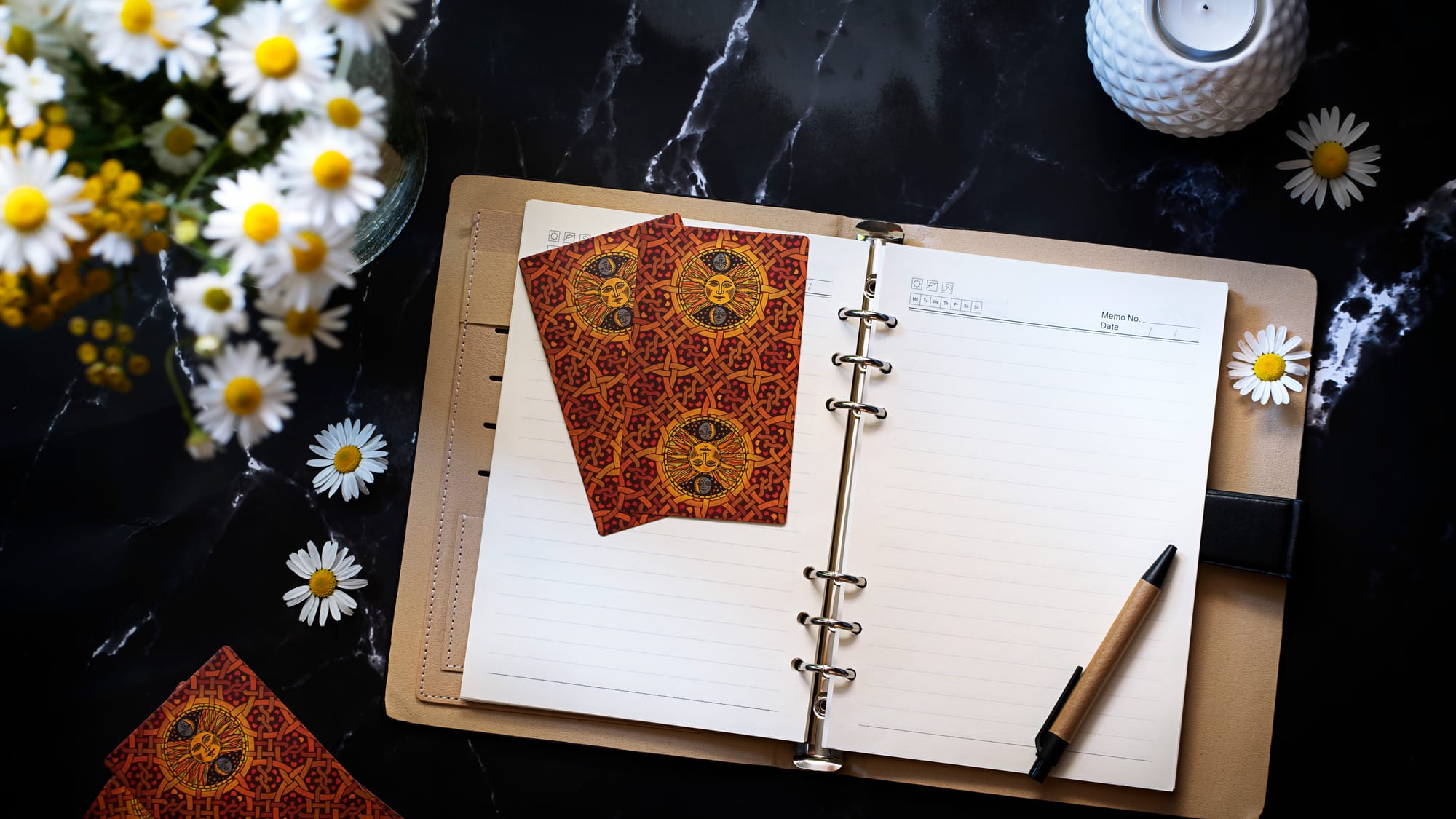
Heart of Tigiris is a spiritual space where art and intuition meet, and that meeting point is exactly what Tarot journaling is for. When you journal with the cards, you are not only recording meanings, you are training your eyes and body to recognize a personal visual language. Symbolism, color, and line are not decoration. They are information, and they often speak faster than keywords ever can.
This article is built as a practical list of 18 journaling prompts you can return to again and again. Each prompt helps you decode Tarot imagery as intuitive language, especially if you read illustrated decks, pip decks with design choices, or any deck where art is doing part of the reading. You can use these prompts with a daily pull, a full spread, a single card you cannot stop thinking about, or a card you avoid. If you want to deepen your connection to the imagery and build confidence in your interpretations, choose one prompt per session and write for 10 to 20 minutes.
Helpful setup before you begin, keep your writing simple and repeatable. Date your entry, note the deck, the card(s), and the question. Then choose one prompt from the list. If you are reading for others, you can still journal privately afterward to refine your symbolism and strengthen your recall for future readings.
- 1. “What is the first visual thing my attention touches, and why?”Begin by describing the first place your gaze lands on the card. Do not interpret yet. Write it like a camera, not a fortune teller. Is it a face, a hand, a moon, a single bright color, a sharp angle, a small animal in the corner. Then ask why your attention went there. Was it attraction, discomfort, familiarity, or curiosity.
- Write a three sentence “eye path” report, for example, “I looked at the crown, then the river, then the hidden figure.”
- List three possible reasons your attention chose that entry point, including one emotional reason and one practical reason.
- Finish with one interpretation that comes only from that first focal point, even if it contradicts the book meaning.
- 2. “If this card were only shapes, what would it be saying?”Reduce the card to geometry. Circles, triangles, squares, spirals, waves, vertical lines, diagonals. Shapes carry meaning because they imply motion and containment. Circles can suggest cycles, wholeness, repetition, protection. Triangles can suggest focus, aspiration, conflict, or direction. Squares can suggest stability, limits, foundations, rules.
- List every distinct shape you can find, including implied shapes formed by posture or architecture.
- Write one verb for each shape, for example, “circle, holds,” “triangle, aims,” “diagonal, cuts.”
- Write a two paragraph interpretation using only those verbs, no Tarot keywords allowed.
- 3. “What is the loudest color, and what does it want from me?”Choose the most dominant color, or the color that feels the most emotionally loud. Describe its exact tone. Is it blood red, rose, brick, rust. Is the blue icy, stormy, midnight, turquoise. Then explore what that color asks you to notice.
- Write what the color would say if it could speak in first person, for example, “I am the red that wants action now.”
- Note where the color appears and where it is absent. Absence is also a message.
- Connect the color to a lived memory, a place, a season, a piece of clothing, a warning sign, a comfort object.
- 4. “Where is the light coming from, and what is it revealing or hiding?”Light direction tells a story about awareness. Look for highlights, shadows, glowing objects, halos, lanterns, lightning, sunrise, moonlight. Determine whether the light is natural or created. Then ask what the light shows, and what it leaves obscure.
- Describe the lighting like a film scene. Is it soft, harsh, single source, scattered, backlit.
- Identify one detail that becomes meaningful only because of light, for example, a shadow behind a figure.
- Ask, “If the light moved, what truth would become visible next?”
- 5. “What is the line quality, and what mood does it set?”Line is emotion made visible. Thick lines can feel confident, heavy, protective, or final. Thin lines can feel delicate, anxious, precise, or fragile. Smooth lines can feel soothing or compliant. Jagged lines can feel urgent, electric, defensive.
- Describe the dominant line style using sensory words, for example, “scratchy,” “silky,” “carved,” “trembling.”
- Find one place where the line quality changes. Ask why the artist changed it there.
- Translate line quality into advice, for example, “Move slowly and carefully,” or “Act boldly, commit.”
- 6. “What is the body language saying that the face is not saying?”Many decks communicate through posture, hands, weight distribution, and distance. Even when faces are neutral, the body tells the truth. Journal about stance, shoulders, neck tension, open palms versus clenched fists, gaze direction, and how much space the figure takes.
- Write a neutral description of the posture, no interpretation.
- Then write what you think the posture means emotionally.
- Finally write how that posture relates to your question, for example, “I am bracing for impact,” “I am reaching,” “I am refusing.”
- 7. “What object feels like a key, and what door might it open?”Tarot art is full of objects, cups, swords, books, keys, flowers, tools, jewelry, mirrors, animals, boats, windows. Choose one object that feels important, even if it is small. Explore it like a symbol in a dream.
- List the object’s practical uses in real life.
- List its symbolic uses in stories, myths, religion, or personal memories.
- Write a sentence that begins with, “This object is here because…” and finish it three different ways.
- 8. “What is happening at the edges of the card that I usually ignore?”The edges often contain background details that change the meaning. A distant mountain can suggest a long term goal. A tiny ship can suggest a message, travel, or emotional distance. A barely visible storm can suggest pressure building.
- Do a slow scan clockwise around the border and write down each detail.
- Choose one edge detail and make it the center of the story. How does the card change when that detail is the main character.
- Ask, “What am I pushing to the edge in my own life right now?”
- 9. “What is the weather, the season, and the temperature of this card?”Even indoors scenes have atmosphere. Weather and season are emotional cues. Winter can be rest, scarcity, clarity, or isolation. Spring can be initiation and fragility. Summer can be abundance and exposure. Autumn can be harvest and release. Temperature matters too, cold can feel clean or lonely, heat can feel motivating or overwhelming.
- Name the season and give three reasons from the imagery.
- Describe the air, humid, dry, windy, still, smoky, crisp.
- Write guidance as weather advice, for example, “Bring a coat,” meaning prepare, or “Open the windows,” meaning ventilate and tell the truth.
- 10. “What is the relationship between foreground and background, and what does that say about priorities?”Foreground often signals what feels urgent. Background often signals what is stable, long term, or overlooked. Some cards place the most meaningful symbol far away. Others push it into your face. Compare size, clarity, and contrast.
- List three foreground elements and three background elements.
- Write what you are currently treating as foreground in your life.
- Ask, “What should move forward, what can move back?” then answer using only imagery references.
- 11. “What is the direction of motion, and where is it trying to take me?”Cards suggest motion even when nothing is literally moving. Look at walking figures, flowing water, wind in clothing, angled weapons, animals mid step, flying birds. Note whether motion goes left to right, right to left, upward, downward, inward, outward.
- Identify the main direction of motion and what creates it.
- Write how it feels in your body, rushing forward, pulling back, rising, sinking.
- Translate direction into a practical next step, for example, upward could be “raise standards,” outward could be “share,” inward could be “reflect and consolidate.”
- 12. “What is repeated, and what does repetition want me to learn?”Repetition is a visual highlighter. Multiple cups, repeated patterns on clothing, twin pillars, repeated stars, many wands, repeated flowers. Repetition can indicate practice, obsession, mastery, ritual, reinforcement, or a lesson that keeps returning.
- List what repeats and count it if possible.
- Write three meanings for repetition, one supportive, one challenging, one neutral.
- Ask, “Where in my life am I repeating the same pattern, and what is the smallest change I can make?”
- 13. “What is missing that I expected to see?”Absence is one of the most underrated reading tools. You may expect a smile and see none. You may expect a weapon and see only an empty hand. You may expect a crowd and see solitude. Absence can indicate lack, relief, secrecy, restraint, or a new approach.
- Write what you expected to see in this card, based on tradition, your memory, or your gut.
- Write what is actually there instead, and how it changes the message.
- Ask, “What am I not acknowledging because it is not visibly present, yet it matters?”
- 14. “What does this card sound like, and what is the volume level?”Turn the image into sound. Is it quiet, echoing, noisy, rhythmic, metallic, watery. Can you hear footsteps, chanting, laughter, a cracking tower, a turning wheel. Sound adds another layer to intuition, and it often reveals stress levels, urgency, or calm.
- Write a short soundscape description in present tense.
- Give the card a volume from 1 to 10, then justify it with imagery.
- Ask, “If I lowered the volume, what would change, if I raised it, what would be impossible to ignore?”
- 15. “If I could step into the card, where would I stand, and what would I refuse to touch?”Treat the card as a room or landscape. Choose where your body would naturally go. Near the doorway, behind a pillar, beside the water, in front of the throne. Then identify what you would avoid touching, a sword, a cup, a fire, a chained figure, an offering.
- Write your position and why it feels safe or risky.
- Write what you would touch if you were brave, and what touching it would mean.
- Ask, “What is my current relationship to power, vulnerability, and choice, based on where I stand?”
- 16. “What is the card’s emotional spectrum, from shadow to gift?”Every card has a range. Symbolism, color, and line can show you where on the spectrum you are. For example, a bright yellow can be optimism or anxiety. A strong black can be elegance or suppression. A sharp sword can be clarity or cruelty. Journal the card as both caution and blessing.
- Write the shadow expression of the card in one paragraph, using only visual evidence.
- Write the gift expression in one paragraph, again using only visual evidence.
- Choose one tiny adjustment that shifts you from shadow to gift, for example, “soften the jaw,” “turn toward the light,” “set the sword down intentionally.”
- 17. “How does this card change when I change the question?”To decode intuitive language, you need flexibility. Take the same card and ask three different questions, such as “What is my next step,” “What am I avoiding,” “What helps me heal,” or “What is the lesson here.” Notice how the symbolism, color, and line rearrange themselves in your mind.
- Write the three questions and a separate mini reading for each, three to five sentences.
- Underline the one visual detail that stayed relevant across all three readings.
- Circle the visual detail that changed meaning the most, then write why you think it is so adaptable.
- 18. “What personal symbol is this card teaching me, and how will I recognize it in daily life?”This final prompt turns Tarot journaling into a living practice. Choose one symbol from the card, a color, a line style, an animal, a flower, a posture, a tool. Decide what it means for you, specifically. Then define how it may show up outside the deck, in conversation, in dreams, in art, in street signs, in your own behavior.
- Write, “In my language, this symbol means…” then define it in one clear sentence.
- List three real world places you might encounter it, including one internal place, like a recurring feeling.
- Write one action you will take when you see it, for example, pause, ask for clarity, set a boundary, follow the invitation, or rest.
How to use these prompts as a repeatable practice If you want this to feel doable, create a rotation. For one week, focus only on color prompts, such as prompts 3, 4, 9. The next week, focus only on line and shape prompts, such as prompts 2, 5, 11. Another week, focus on story and environment prompts, such as prompts 8, 10, 15. This approach helps you develop a balanced reading style that includes art analysis, emotional sensing, and practical application.
A simple journaling template you can copy Date. Deck. Card(s). Question. One sentence for your first impression. Then choose one prompt from the list. End with three lines, “What I know,” “What I suspect,” “What I will do.” That final action line is important because it turns symbolism into lived wisdom.
Closing note If you are drawn to illustrated decks and visual storytelling, journaling is the fastest way to build trust with your intuition. Symbolism, color, and line are already speaking to you. These prompts help you slow down enough to hear them clearly, then translate what you hear into language you can use in readings and in life. For more about the art forward Tarot space behind this article, visit www.tigirisillustrations.com.